


Introduction
Healthy gums are the foundation of a strong and beautiful smile. Many people focus on brushing their teeth but often forget that gum health is just as important for overall oral hygiene. When gums are healthy, they support the teeth and protect the mouth from infection. However, when they become inflamed or infected, problems such as gingivitis, bleeding gums, and even tooth loss can occur.
Learning the right tips for healthy gums can help prevent these issues and keep your mouth in excellent condition. Good gum care not only improves oral health but can also support overall health because gum disease has been linked to conditions like heart disease and diabetes. By following simple daily habits and making smart lifestyle choices, you can maintain strong, pink, and disease-free gums.
This article explores expert-recommended tips for healthy gums, explains why gum care matters, and provides practical guidance to help you maintain optimal oral health for years to come.
Understanding Gum Health and Why It Matters
Gums, also known as gingiva, are the soft tissues that surround and support your teeth. Their main function is to protect the roots of teeth and the underlying bone structure. Healthy gums appear firm and pink, and they fit tightly around the teeth without swelling or bleeding.
When bacteria accumulate along the gum line, plaque forms. If plaque is not removed through proper oral hygiene, it can harden into tartar. Tartar buildup can irritate the gums and cause inflammation, leading to gum disease. Gingivitis is the earliest stage of gum disease and is often reversible with good oral care. If left untreated, it can progress to periodontitis, a more serious condition that damages gum tissue and bone.
Understanding the importance of gum health makes it easier to adopt the right tips for healthy gums and protect your smile from long-term damage.
Daily Oral Hygiene for Strong and Healthy Gums
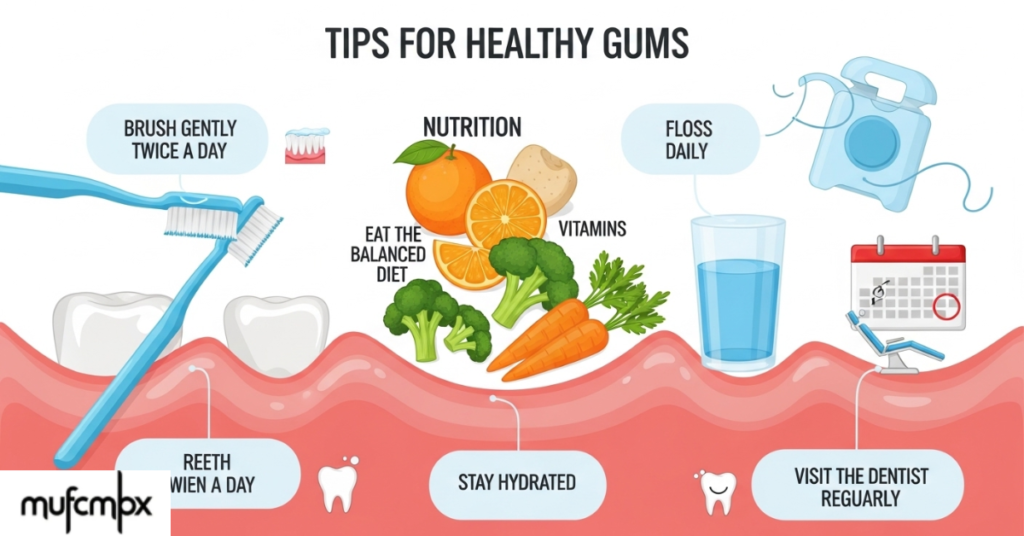
One of the most effective tips for healthy gums is maintaining consistent daily oral hygiene. Proper brushing and flossing remove plaque and bacteria before they can cause irritation or infection.
Brushing your teeth at least twice a day helps keep the gum line clean and prevents plaque buildup. Using a soft-bristled toothbrush is important because hard bristles can damage delicate gum tissue. Gentle circular motions are more effective and safer than aggressive brushing.
Flossing plays a critical role in gum care because it removes food particles and plaque between teeth where a toothbrush cannot reach. Skipping flossing can allow bacteria to grow in these hidden spaces, increasing the risk of gum inflammation.
Rinsing with an antibacterial mouthwash can also help reduce bacteria and promote healthier gums. When used as part of a daily routine, mouthwash complements brushing and flossing by reaching areas that may otherwise be missed.
Nutrition and Diet for Gum Health
Diet plays a significant role in maintaining gum health. A balanced diet rich in vitamins and minerals supports the immune system and helps protect gums from infection.
Vitamin C is especially important for gum health because it strengthens connective tissue and helps prevent inflammation. Foods like oranges, strawberries, bell peppers, and broccoli are excellent sources of this essential nutrient. When the body lacks vitamin C, gums may become swollen, tender, and prone to bleeding.
Calcium is another important nutrient because it strengthens teeth and the bones that support them. Dairy products, leafy greens, and fortified foods provide calcium that contributes to better oral health.
Crunchy fruits and vegetables such as apples and carrots can also help clean teeth naturally while stimulating saliva production. Saliva plays a protective role by neutralizing acids and washing away harmful bacteria.
Following proper nutrition is one of the most overlooked tips for healthy gums, yet it has a powerful impact on maintaining long-term oral health.
The Importance of Regular Dental Checkups
Visiting a dentist regularly is essential for preventing gum disease and maintaining oral health. Professional dental cleanings remove tartar buildup that cannot be eliminated through brushing or flossing alone.
Dentists can also detect early signs of gum disease before they become serious problems. Early diagnosis allows for faster treatment and prevents complications such as gum recession or tooth loss.
During a dental visit, the dentist examines the gums for redness, swelling, bleeding, and pocket formation around teeth. These symptoms may indicate the presence of gum disease.
Professional guidance is one of the most valuable tips for healthy gums, as dental experts can recommend personalized care routines based on your specific needs.
Lifestyle Habits That Affect Gum Health
Lifestyle choices can have a major impact on gum health. Certain habits can increase the risk of gum disease, while others support stronger and healthier gums.
Smoking is one of the most harmful habits for gum health. Tobacco reduces blood flow to the gums, weakens the immune system, and slows the healing process. Smokers are significantly more likely to develop severe gum disease compared to non-smokers.
Stress can also affect oral health by weakening the body’s immune response. When the immune system is compromised, it becomes harder to fight bacterial infections in the mouth.
Staying hydrated is another simple yet effective habit that supports gum health. Drinking enough water helps wash away food particles and keeps the mouth moist, which discourages bacterial growth.
Making positive lifestyle choices is an essential part of following the best tips for healthy gums.
Recognizing Early Signs of Gum Problems
Understanding the early warning signs of gum disease can help prevent serious complications. Many people ignore symptoms until the condition becomes severe, but early detection allows for easier treatment.
Common signs of gum problems include redness, swelling, tenderness, and bleeding during brushing or flossing. Persistent bad breath may also indicate bacterial buildup along the gum line.
Gum recession is another sign of potential gum disease. When gums pull away from teeth, the roots become exposed, making teeth more sensitive and vulnerable to decay.
If any of these symptoms appear, it is important to seek dental advice promptly. Addressing these issues early is one of the most practical tips for healthy gums because it prevents minor problems from developing into major oral health concerns.
Natural Practices That Support Gum Health
In addition to standard dental care, certain natural practices may help improve gum health. Saltwater rinses are often recommended because they reduce inflammation and help cleanse the mouth.
Oil pulling is another traditional practice that some people use to improve oral hygiene. This method involves swishing oil, usually coconut oil, in the mouth to help remove bacteria.
Herbal ingredients such as aloe vera and green tea have also been studied for their antibacterial and anti-inflammatory properties. While these methods should not replace professional dental care, they may complement daily oral hygiene routines.
Incorporating safe natural approaches can enhance the effectiveness of other tips for healthy gums and contribute to better overall oral health.
Preventing Gum Disease Through Consistency
Consistency is the key to maintaining healthy gums. Many people start strong with oral care routines but gradually become less consistent over time.
Creating a daily habit of brushing, flossing, and rinsing ensures that plaque does not accumulate along the gum line. Even small lapses in oral hygiene can allow bacteria to grow and trigger gum inflammation.
Regular dental visits, healthy nutrition, and mindful lifestyle choices must work together to maintain long-term gum health. When these habits become part of your daily routine, preventing gum disease becomes much easier.
Following consistent and reliable tips for healthy gums helps ensure that your smile stays healthy and confident for years to come.
Conclusion
Healthy gums are essential for maintaining strong teeth and overall oral health. Without proper care, gums can become inflamed, infected, and eventually damaged by gum disease. Fortunately, adopting the right habits can protect your gums and prevent these problems.
The most effective tips for healthy gums include maintaining proper oral hygiene, eating a balanced diet, visiting the dentist regularly, and avoiding harmful habits like smoking. Paying attention to early warning signs and practicing consistent oral care can make a significant difference in your long-term dental health.
By making gum health a priority today, you can preserve your smile, improve your well-being, and enjoy the confidence that comes with strong and healthy gums.
Frequently Asked Questions
How can I keep my gums healthy naturally?
Maintaining good oral hygiene, eating vitamin-rich foods, staying hydrated, and using saltwater rinses can naturally support gum health.
What causes unhealthy gums?
Poor oral hygiene, plaque buildup, smoking, poor diet, and certain medical conditions can contribute to gum disease and unhealthy gums.
How often should I visit a dentist for gum health?
Most dental professionals recommend visiting a dentist every six months for regular checkups and professional cleanings.
Can gum disease be reversed?
The early stage of gum disease, known as gingivitis, can often be reversed with improved oral hygiene and professional dental care.










Leave a Reply