

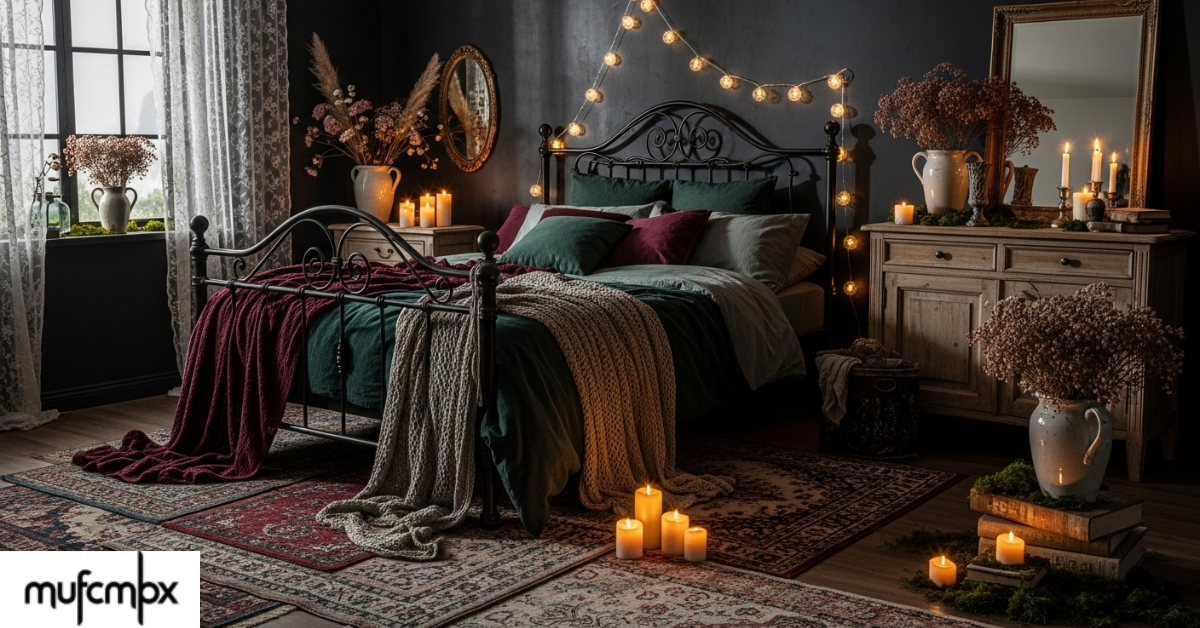
The dark cottagecore bedroom aesthetic has taken the interior design world by storm, blending rustic charm with a moody, romantic atmosphere. Rooted in nostalgia and nature, this style reimagines traditional cottagecore with deeper tones, richer textures, and a slightly mysterious edge. It offers a sanctuary that feels both grounded and enchanting, making it perfect for those who want a cozy yet dramatic personal space.
Unlike the lighter, pastel-heavy version of cottagecore, a dark cottagecore bedroom leans into earthy hues, vintage decor, and dim lighting to create a warm and intimate environment. This design trend reflects a growing desire for comfort, escapism, and connection to nature, all while embracing individuality.
In this in-depth guide, you’ll learn how to create your own dark cottagecore bedroom, from choosing the right color palette to selecting decor, furniture, and lighting that embody this aesthetic.
Understanding the Dark Cottagecore Bedroom Aesthetic
A dark cottagecore bedroom is not just about making a room look dim or gothic. It is a carefully curated style that merges the softness of rural living with deeper, more atmospheric elements.
At its core, this aesthetic draws inspiration from countryside life, vintage storytelling, and nature. However, instead of light florals and airy fabrics, it embraces shadowy tones, antique textures, and a sense of quiet solitude.
This design style often evokes imagery of old countryside cottages, candlelit evenings, worn wooden furniture, and shelves filled with books and dried herbs. It is both comforting and slightly mysterious, making it deeply immersive.
Why Dark Cottagecore Bedrooms Are So Popular
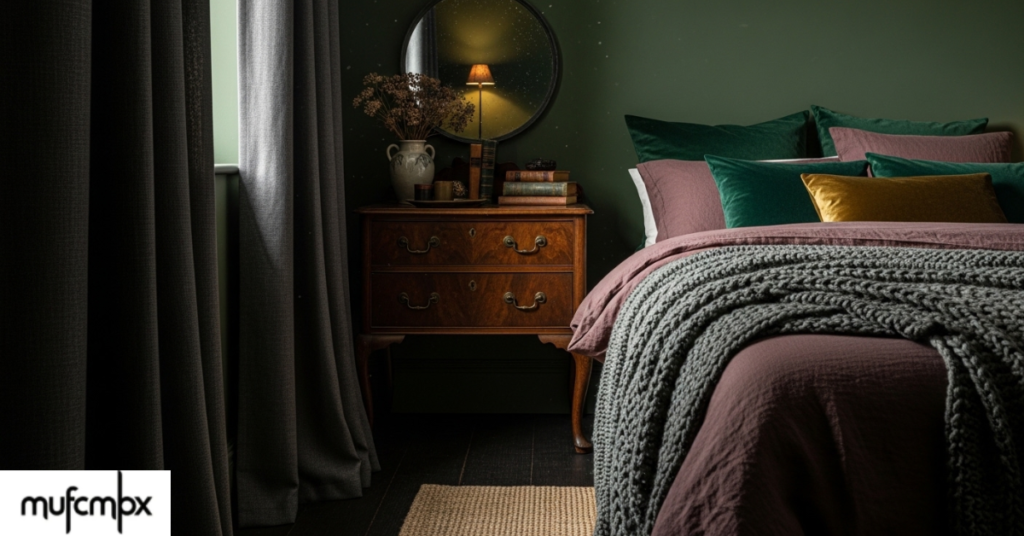
The rise of the dark cottagecore bedroom trend can be linked to broader lifestyle shifts. Many people are seeking refuge from fast-paced digital lives and turning toward slower, more intentional living.
A dark cottagecore bedroom provides an escape. The subdued lighting and earthy elements promote relaxation, while the vintage aesthetic offers a sense of timelessness. It also aligns with sustainability trends, as it often incorporates thrifted or antique items rather than mass-produced decor.
Additionally, this aesthetic allows for more personal expression. It blends elements of academia, gothic style, and rustic charm, creating a unique and highly customizable space.
Choosing the Perfect Color Palette
The foundation of a dark cottagecore bedroom lies in its color palette. Rich, earthy tones are essential for creating the desired mood.
Deep greens, such as forest and moss, are commonly used to reflect nature. Dark browns and warm taupes add grounding warmth, while charcoal gray and soft black create depth. Muted burgundy, plum, and rust tones can also be incorporated for a subtle touch of color.
Walls painted in these shades instantly transform a room into a cozy retreat. If painting the entire room feels overwhelming, accent walls or darker furniture can achieve a similar effect.
Layering colors is key. Combining different shades within the same palette helps avoid a flat or overly heavy look, ensuring the space remains inviting.
Furniture Selection for a Dark Cottagecore Bedroom
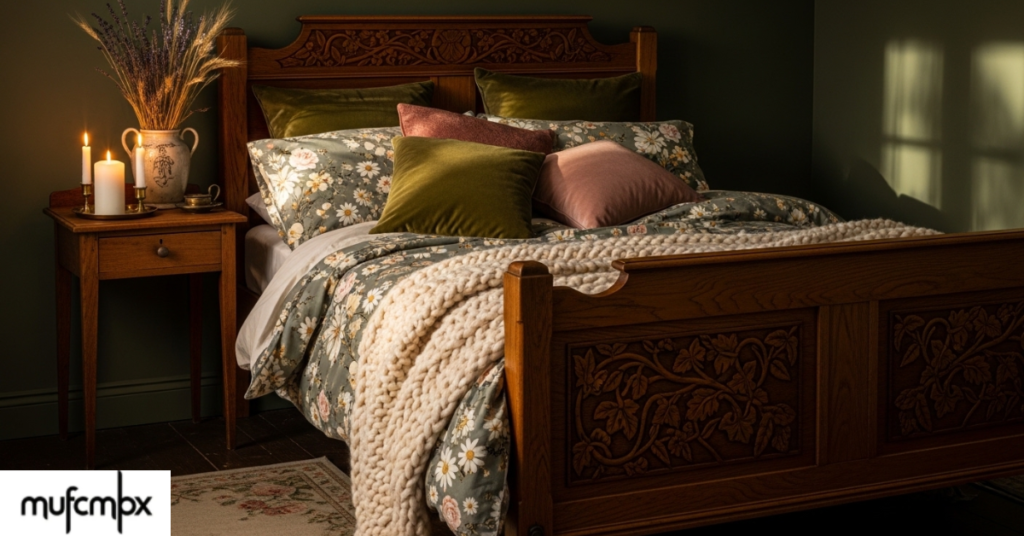
Furniture plays a significant role in establishing the aesthetic. The focus should be on vintage or vintage-inspired pieces with character.
Wooden furniture is essential. Look for pieces with natural grain, distressed finishes, or carved details. Bed frames made of dark wood or wrought iron are particularly fitting. Nightstands, dressers, and wardrobes should feel slightly aged rather than overly polished.
The charm of a dark cottagecore bedroom lies in imperfection. Scratches, worn edges, and patina add authenticity and tell a story.
Upholstered furniture in velvet or linen can introduce softness while maintaining the moody tone. Deep green or burgundy fabrics work especially well.
Lighting: Creating a Warm and Intimate Glow
Lighting is one of the most important aspects of a dark cottagecore bedroom. It defines the mood and enhances the overall aesthetic.
Harsh, bright lighting should be avoided. Instead, opt for warm, soft illumination. Table lamps with fabric shades, vintage-style wall sconces, and fairy lights can create a gentle glow.
Candles are a signature element of this style. Whether real or LED, they add a flickering warmth that instantly makes the room feel cozy and nostalgic.
Natural light should also be considered. Sheer or lace curtains can filter sunlight during the day, creating a soft, diffused effect that complements the darker tones.
Textiles and Fabrics for Cozy Layers
Layering textiles is essential in a dark cottagecore bedroom. The goal is to create a space that feels soft, warm, and inviting.
Bedding should feature natural fabrics like cotton, linen, or wool. Choose darker hues or muted patterns such as small florals, plaid, or botanical prints.
Throw blankets and cushions add depth and texture. Mixing materials like knit, velvet, and faux fur enhances the cozy factor.
Rugs are another important element. Persian-style or vintage rugs with intricate patterns work particularly well, adding both warmth and visual interest.
Nature-Inspired Decor Elements
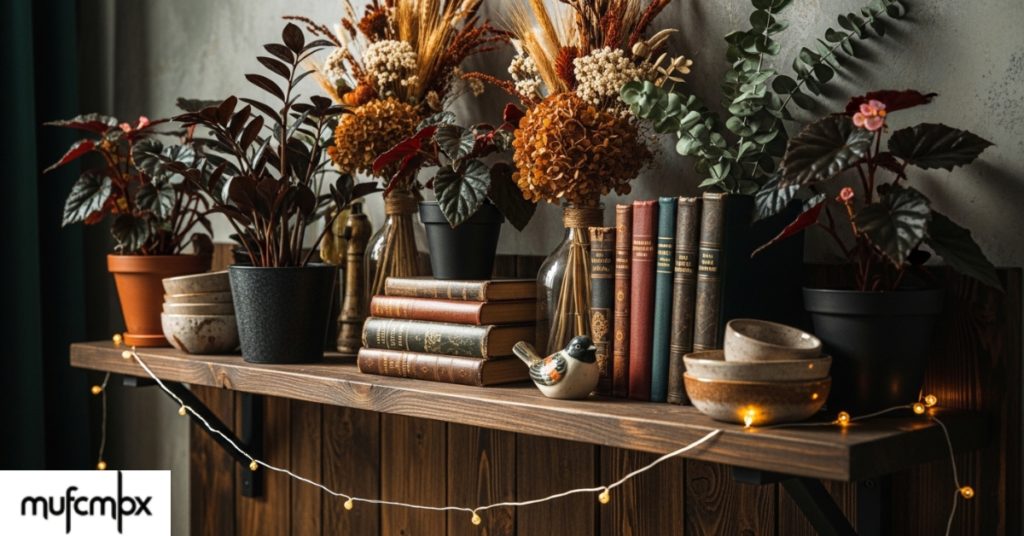
Nature is at the heart of cottagecore, and this remains true in its darker variation.
Dried flowers, branches, and pressed botanicals are commonly used for decoration. These elements bring the outdoors inside while maintaining the subdued color palette.
Potted plants can also be included, particularly those with darker foliage. However, the focus is often on preserved or dried arrangements, which align better with the moody aesthetic.
Wooden bowls, stone accents, and ceramic pieces further enhance the natural feel of the space.
Wall Decor and Artistic Touches
Walls in a dark cottagecore bedroom should feel curated rather than empty.
Gallery walls featuring vintage artwork, botanical illustrations, or antique frames can add personality. Dark wood or gold frames work best for maintaining the aesthetic.
Mirrors with ornate or aged finishes can reflect light and make the space feel larger while adding a decorative element.
Tapestries and fabric wall hangings can also contribute to the cozy atmosphere, especially those with earthy tones or subtle patterns.
Incorporating Vintage and Antique Pieces
One of the defining characteristics of a dark cottagecore bedroom is the use of vintage and antique items.
Thrift stores, flea markets, and family heirlooms are excellent sources for unique decor. Old books, antique clocks, and vintage glassware can all be incorporated into the design.
These pieces add authenticity and help create a lived-in feel. They also support sustainable practices by reducing the need for new production.
Mixing old and new elements is perfectly acceptable, as long as the overall aesthetic remains cohesive.
Creating a Personal Sanctuary
A dark cottagecore bedroom should feel deeply personal. It is not just about following a trend but about creating a space that reflects your personality and interests.
Incorporate items that have meaning to you, whether it’s a collection of books, handmade crafts, or sentimental objects. This adds depth and emotional connection to the space.
A reading nook, writing desk, or small corner dedicated to a hobby can enhance the functionality of the room while maintaining the aesthetic.
Balancing Darkness with Comfort
While the dark cottagecore bedroom aesthetic leans toward moody tones, it is important to maintain balance.
Too much darkness can make a space feel heavy or uninviting. This can be avoided by incorporating lighter elements such as cream-colored bedding, soft lighting, or reflective surfaces.
Textures also play a role in balancing the space. Soft fabrics and layered materials can counteract the intensity of darker colors.
The goal is to create a room that feels cozy and welcoming rather than overwhelming.
Seasonal Adaptations for Year-Round Appeal
One of the advantages of a dark cottagecore bedroom is its adaptability.
In colder months, heavier textiles, warm lighting, and richer tones can enhance the cozy atmosphere. Adding extra blankets and thicker curtains can make the space feel even more inviting.
During warmer seasons, lighter fabrics and subtle floral elements can refresh the room while maintaining the overall aesthetic.
This flexibility ensures that the space remains comfortable and relevant throughout the year.
Common Mistakes to Avoid
Designing a dark cottagecore bedroom requires attention to detail. One common mistake is overloading the space with too many dark elements without variation.
Another issue is neglecting lighting. Without proper illumination, the room can feel dull rather than atmospheric.
It is also important to avoid overly modern or minimalist pieces that clash with the vintage-inspired aesthetic.
Maintaining a balance between authenticity and functionality is key to achieving the desired look.
The Role of Sustainability in Dark Cottagecore Design
Sustainability is a natural fit for the dark cottagecore bedroom aesthetic.
Using second-hand furniture, repurposing decor, and choosing natural materials all contribute to an eco-friendly approach.
This aligns with the broader philosophy of cottagecore, which emphasizes simplicity, mindfulness, and a connection to nature.
By making thoughtful choices, you can create a beautiful space while minimizing environmental impact.
Styling Tips for a Cohesive Look
Achieving a cohesive dark cottagecore bedroom involves careful styling.
Start with a clear vision and build around a central theme or color palette. Layer textures and incorporate a mix of materials to add depth.
Pay attention to small details, such as hardware, textiles, and decorative accents. These elements can make a significant difference in the overall look.
Consistency is important, but there should also be room for individuality and creativity.
Conclusion
A dark cottagecore bedroom is more than just a design trend; it is a lifestyle choice that embraces comfort, nostalgia, and a deeper connection to nature.
By combining rich colors, vintage elements, and soft lighting, you can create a space that feels both cozy and enchanting. The key is to balance darkness with warmth, ensuring that the room remains inviting and functional.
Whether you are starting from scratch or updating an existing space, this aesthetic offers endless possibilities for creativity and personal expression.
FAQs
What colors work best in a dark cottagecore bedroom?
Deep greens, browns, charcoal grays, and muted reds are ideal for creating a moody and cohesive look.
Can a small room use this aesthetic?
Yes, but it is important to balance dark tones with proper lighting and lighter accents to prevent the space from feeling cramped.
Is dark cottagecore expensive to achieve?
Not necessarily. Thrifted and vintage items are key components, making it possible to design on a budget.
How do I make the room feel cozy instead of gloomy?
Focus on warm lighting, soft textiles, and layered decor to create a welcoming atmosphere.
Can modern elements be included?
Yes, as long as they blend with the overall aesthetic and do not disrupt the vintage-inspired feel.






Leave a Reply